Procedure guide

Scar care after eyelid surgery

Eyelid incisions are among the finest scars, hidden in the lid crease or just below the lashes. The skin is thin and the eye is close — so precision and precautions come first.

  • Very thin skin near the eye
  • Tiny amounts of gel
  • Manufacturer example
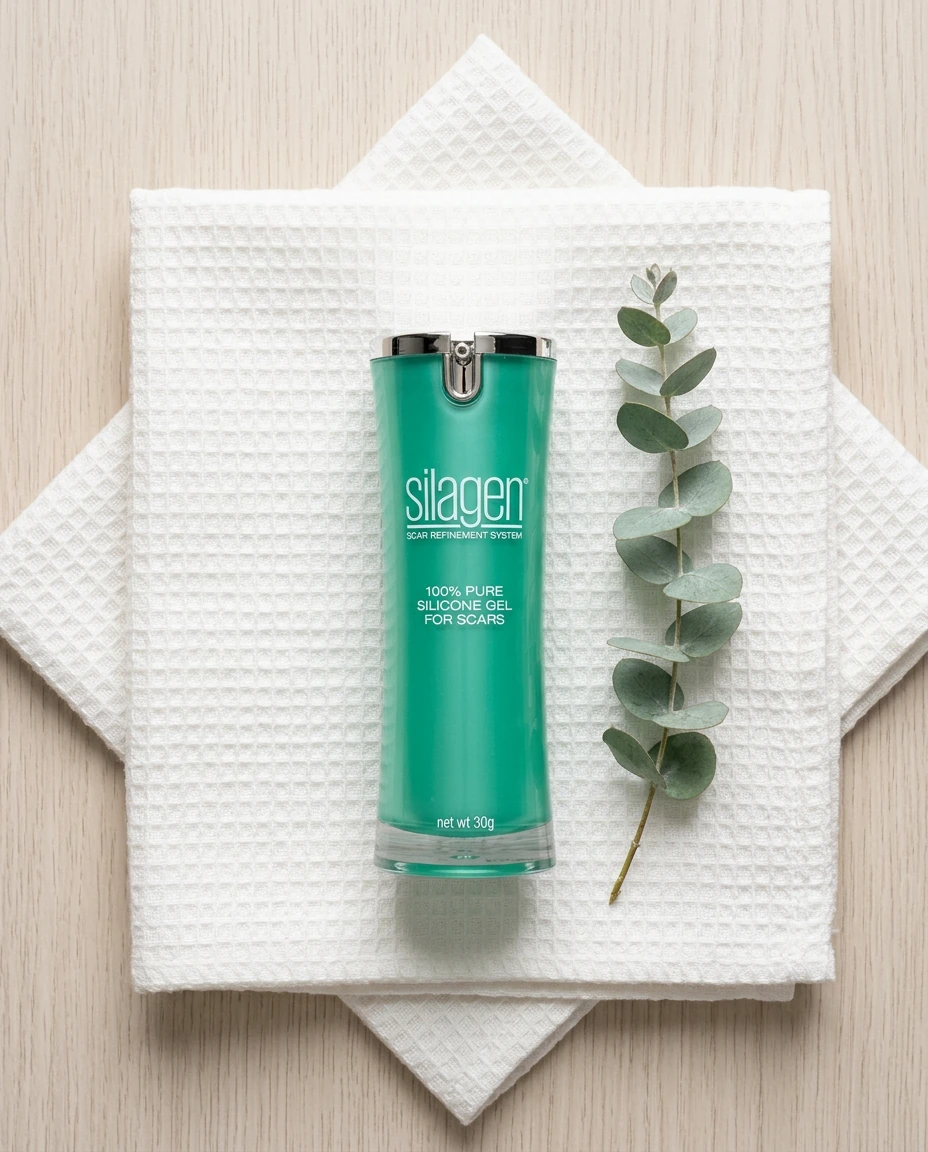
Mint Silagen Pure gel bottle on a white waffle towel with eucalyptus

Upper and lower lid incisions

  1. Upper blepharoplasty

    Where: In the natural crease of the upper lid, sometimes extending slightly to the side

    Formats to ask about: Possibly a very small amount of gel, kept to the incision line — only if your surgeon agrees.

  2. Lower lid, below the lashes

    Where: Just beneath the lower lash line

    Formats to ask about: Ask first — this is very close to the eye.

  3. Lower lid, inside the lid

    Where: On the inside surface of the lid (transconjunctival)

    Formats to ask about: Usually no visible skin scar. Never apply scar-care products inside the eyelid; ask your surgeon.

Formats to discuss with your surgeon

Eyelid precautions to confirm

  1. Keep it out of the eye

    Apply only to the outer skin along the incision. Follow the label’s eye precautions and ask what to do if product gets in the eye.

  2. Use a clean fingertip

    Wash your hands first. A tiny amount is enough for both lids.

  3. Let it dry before makeup

    Ask when eye makeup is allowed at all, then apply only over dried gel.

  4. Watch for irritation

    Stop and contact your team for redness, swelling or watering that is getting worse.

Source: Silagen Gel instructions for use (opens in a new tab)

Manufacturer example: upper blepharoplasty

Eyelid · SIL_0037

Upper blepharoplasty

Reported: Pure Silicone Gel

Source caption (exact text)

After 1 month of treatment Before treatment UPPER BLEPHAROPLASTY SILAGEN PURE GEL PATIENT SUBMITTED PHOTOS SIL_0037 7 months after beginning treatment

Manufacturer-supplied; patient-submitted photographs. Individual results vary. Silagen Before and After Full Gallery 5-26.pdf, p. 11.

See these in the full results gallery

Watch: Pure gel explained

Silagen 100% Pure Silicone Gel · 42 sec · Silagen

Reading summary of on-screen text

Background music; information appears as on-screen text. This is a summary, not a verbatim transcript.

  • Introduces the physician-exclusive 100% Pure gel, made from medical-grade silicone.
  • Describes a silky texture that leaves no sticky residue, and the manufacturer’s statement that it softens, flattens and reduces redness of scars.
  • Shows manufacturer example photos (breast reduction, Mohs surgery and rotator cuff surgery) with their own timings.
  • Suggests pairing Pure gel with Silagen + SPF 30 during the day.

Questions to ask your surgeon

  • Is silicone gel appropriate for my eyelid incisions?
  • When can I start, and how close to the lashes can I apply it?
  • What should I do if gel gets into my eye?
  • When can I use eye makeup and contact lenses?
  • How will you check the scars as they mature?

Frequently asked questions

Can I use silicone sheets on my eyelids?

Sheets are generally impractical on moving, thin lid skin. Gel applied sparingly is the usual format discussed — ask your surgeon.

How much gel should I use?

Very little. Silagen’s directions call for a very small amount in a thin layer; on eyelids that is even less.

Source: Silagen Gel instructions for use (opens in a new tab)

What if gel gets in my eye?

Follow the first-aid directions on the current label and contact your surgical team.

Is the eyelid example typical?

It is one manufacturer-supplied, patient-submitted case. Results vary.

Get help with your recovery

Questions about your scar care?

Your surgeon’s instructions come first. A TRC Care Planner can help you organize questions for your surgical team and recovery arrangements.

Silagen states its products are sold through authorized medical offices, not online retailers. Ask your surgeon’s office, or ask TRC about your next step. TRC does not sell Silagen products on this site.

Educational information from manufacturer materials, not medical advice. Silagen® is a trademark of Newmedical Technology, Inc. Follow your surgeon’s instructions.