Is this the same as a Brazilian butt lift?
No. A buttock lift mainly removes loose skin; a Brazilian butt lift uses transferred fat to add volume.
A lift does not necessarily make the buttocks fuller and can sometimes leave them looking flatter.
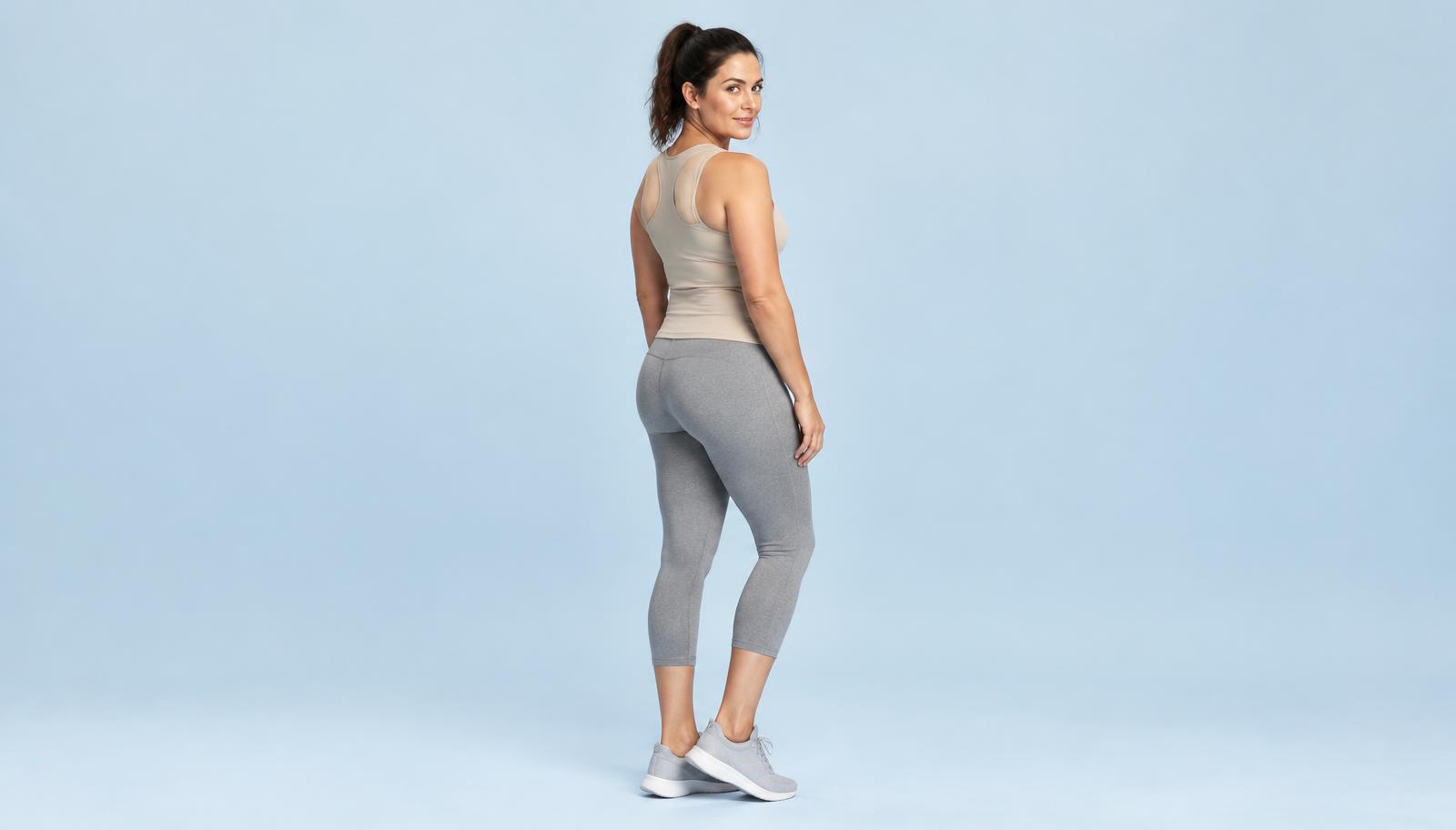
Body Contouring
A buttock lift removes excess skin and tightens supporting tissue to improve the contour of sagging buttocks.
Is this the same as a Brazilian butt lift?
No. A buttock lift mainly removes loose skin; a Brazilian butt lift uses transferred fat to add volume.
A lift does not necessarily make the buttocks fuller and can sometimes leave them looking flatter.
Will there be a scar?
Yes. Removing excess skin requires an incision and leaves a permanent scar.
Its position and length depend on your skin pattern and the planned operation. Ask to review the scar location before deciding.
Who might consider it?
Someone with bothersome sagging skin, a stable weight, and health that supports safe healing.
A surgeon must assess whether a lift fits your anatomy, medical history, and goals.
01 · Overview
A buttock lift, also called a gluteal lift, addresses stretched or hanging skin over the buttocks. These changes may follow substantial weight loss, aging, or changes in skin elasticity. [1]
The surgeon removes excess skin and sometimes underlying fat, then lifts and closes the remaining tissue. Incisions often run along the upper buttocks, but their placement depends on where the skin is loose and whether nearby areas are treated. [1]
This is different from fat-transfer buttock augmentation, often called a Brazilian butt lift, and from buttock implants. A lift improves sagging rather than primarily adding projection; it may be part of a broader lower body lift. [2]
Further weight loss can create more loose skin, while weight gain can stretch the treated area. Your surgeon will discuss how long your weight should be stable and whether your nutrition supports healing.
A lift is not a reliable treatment for cellulite. Some surface texture may change, but dimpling, stretch marks, and unevenness can remain.
02 · Concerns & Goals
Loose skin can change how your buttocks look and how clothing feels. Your consultation can focus on the changes that matter most to you.
Excess skin may fold or drape over the buttocks, especially after weight loss.
Sagging tissue may make the buttocks look less supported, even when your weight is stable.
Loose tissue may bunch under clothing or make certain waistbands and underwear uncomfortable.
A lift may help some contour differences, but it does not reliably restore volume or create perfect symmetry.
03 · Options
The right approach depends on where your skin is loose, how much volume you have, and which scars and recovery demands you are comfortable accepting.

Targets excess skin and sagging over the buttocks.
Addresses loose skin and selected areas of excess fat.
Treats skin laxity extending beyond the buttocks.
Considers fullness as well as skin removal.
A buttock lift, liposuction, and buttock augmentation solve different problems. Combining procedures can change both risks and recovery. [1] [2] [3].
Liposuction removes fat, not excess skin. When skin elasticity is poor, removing fat alone can make looseness more noticeable.
Sometimes, but not always. Your surgeon will weigh the extent of surgery, anesthesia time, blood-clot risk, nutrition, and support at home. Staging treatment may be safer for some people.
04 · Results
The main aim is less sagging and a more supported outline.
Early swelling can hide the eventual contour.
Results can last, but aging and weight changes continue.
No specific shape, symmetry, or scar appearance can be guaranteed. Review realistic expectations with your surgeon. [1]
05 · Recovery
Returning to work does not mean fully healed. Follow your surgeon’s instructions; strenuous activity requires clearance.
Recovery depends on the extent of skin removal and any combined procedures. Your surgical team should provide a personalized plan for positioning, wound care, movement, and follow-up.
Step 1 · Day of surgery
After anesthesia, staff monitor you and review your care plan. You may have dressings, drains, or a support garment. Whether you go home or stay overnight depends on the operation and your health.
Step 2 · First days to 2 weeks
Soreness, swelling, and bruising are common. You may need help with daily tasks and instructions that protect the incision from tension.
Step 3 · Following weeks
Activity increases according to wound healing and your surgeon's assessment. Returning to work does not mean the tissues are fully healed.
Step 4 · Following months
Swelling continues to ease and scars mature. Keep follow-up appointments to review healing and any persistent contour concerns.
These are planning topics, not personal clearance dates. Follow your surgical team's instructions, especially after combined procedures.

Possibly. Their use depends on the operation and your surgeon's approach. If prescribed, ask how to care for them, what problems to report, and when they can be removed.
Contact your team rather than changing dressings or applying products on your own. Some areas may need additional wound care, and larger openings can require further treatment.
06 · Safety
Temporary soreness, bruising, swelling, tightness, and numbness can occur. These should be monitored during follow-up; worsening symptoms or new changes deserve prompt advice.
Blood or fluid can collect under the skin and may require drainage or another procedure.
An infection may need antibiotics, wound care, or surgery.
Incisions can separate or skin and fat may heal poorly, particularly when blood supply is limited.
Scars may widen, thicken, or remain uncomfortable. Numbness or other sensation changes can persist.
Unevenness, asymmetry, reduced fullness, or recurrent sagging may occur. Revision surgery may be considered.
Clots can travel to the lungs, and serious heart, lung, or anesthesia complications can occur.
Discuss these risks and your individual health history with your surgeon. [1]
07 · Costs
Compare written estimates for the same planned scope: a buttock lift alone is different from a lower body lift or a lift combined with liposuction or augmentation.
Surgeon
The surgeon's care and the specific procedures planned.
Ask your surgeonAsk which areas are included and how additional procedures or revisions are billed.
Facility
Anesthesia services, operating room use, and any planned overnight care.
Ask your surgeonAsk whether these are separate charges and what happens if a longer stay is needed.
Supplies
Potential items include garments, dressings, prescriptions, and postoperative visits.
Ask your surgeonConfirm what is included and how unexpected wound care or extra visits are handled.
TRC
Any separately listed coordination or administrative services.
Ask TRCAsk whether a fee applies, what it covers, and whether it is optional.
Your written estimate should explain the services included, any separate charges, and payment terms.
08 · Questions
Cosmetic buttock lifts are generally not covered. If excess skin causes documented medical problems, ask your insurer about its criteria before scheduling; coverage is not assured.
Sometimes the planned scar can sit beneath a waistband, but clothing styles and incision needs vary. Ask your surgeon to show its expected position while you are standing.
Exercise can strengthen gluteal muscles and support health, but it cannot remove substantial loose skin.
Yes. Removing tissue and tightening skin can reduce apparent volume. Discuss this before surgery if fullness is an important goal.
0 consultation questions in your plan
View in My TRC workspaceMy Aesthetic Plan
Bring these to help your consultation:
Choices stay in this visit until saving to your account completes. Nothing is sent to a clinician.
Photographs are illustrative scenes, not patients, staff, facilities or outcomes. This information does not replace a personal assessment by your treating clinician.